Different spaces, different obligations
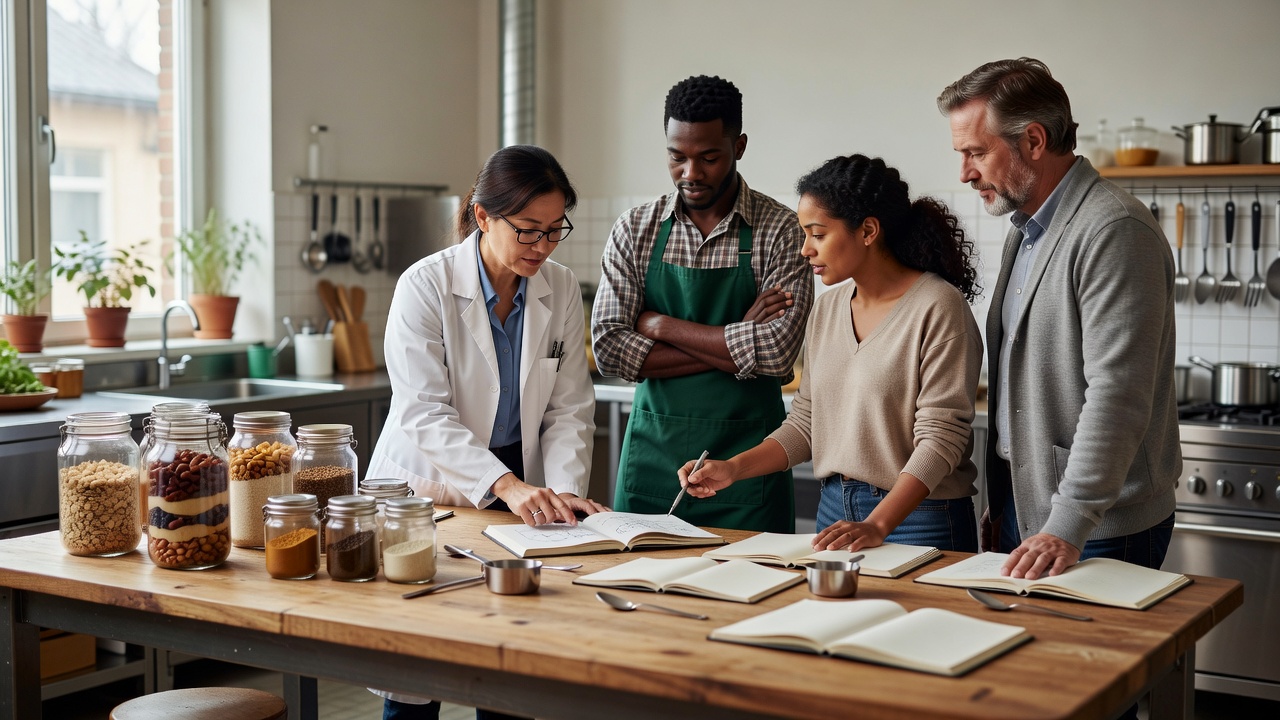
A restaurant research kitchen, a commercial ingredient collection and a community food archive may all keep fermentation records. Their purposes are not identical. One may be developing a dish, another maintaining reference cultures, and another preserving the experiences of a neighbourhood. Understanding that purpose helps a reader judge what a published record can support.
Equipment is only part of the story. Ask who maintains the collection, who can access it and how the institution handles knowledge supplied by others. A carefully photographed vessel says little about consent, continuity of care or whether records survive a staff change. These less visible arrangements often determine whether a library remains useful.
The examples below are reading routes, not endorsements, current visitor listings or statements of partnership. Consult each organisation directly for its present activities and access arrangements.
Restaurant research made public
Noma in Copenhagen helped bring restaurant fermentation research to a wide readership. René Redzepi and David Zilber’s The Noma Guide to Fermentation shows how a kitchen can organise observations around techniques and flavour development. Its value for an archive reader includes the visibility of an investigative process: repeated trials, close attention to ingredients and a vocabulary for discussing outcomes.
That publishing context matters. A restaurant’s priorities, resources and professional environment differ from those of a household. A documented technique does not become universally appropriate merely because it appears in a respected book. Read the method alongside its stated conditions and avoid detaching appealing results from the work needed to understand them.
Noma’s own website is the appropriate starting point for current information about its projects. This archive does not claim access to its internal records or present the organisation’s work as our own research.
A historical laboratory of questions
Nordic Food Lab is an important historical reference for exploratory food research in Copenhagen. Its published work approached ingredients through interdisciplinary questions rather than treating every experiment as a finished menu item. Researchers and cooks considered local ecologies, sensory experience and unfamiliar food possibilities.
For a fermentation archive, the useful lesson is methodological: a record can preserve a question and its route of investigation even when the result is not a retail product. That requires careful distinction between documented findings, speculative possibilities and the circumstances of a particular trial.
Historical material should be dated and described as historical. Do not assume an old project page proves that a laboratory is currently operating, accepting visitors or offering the same programme. Institutional continuity needs evidence just as a culture’s lineage does.
Keeping a living collection
The Puratos Sourdough Library in Saint-Vith, Belgium, provides another model: a collection associated with the preservation and study of sourdough diversity. Karl De Smedt has become closely associated with its public storytelling. Here the central object is not simply a finished loaf but a living culture and the history attached to its source.
This example highlights an important distinction between storing information and maintaining biological material. A digital photograph can be copied; a culture requires suitable ongoing stewardship. A library must also decide how source information, sampling histories and changes in the collection are recorded. Public descriptions cannot reveal every operational detail, so readers should avoid assuming more than the evidence states.
The Quest for Sourdough project offers an accessible route into sourdough stories. As with any organisation-linked resource, read its material with attention to its purpose and commercial context.
Knowledge outside the laboratory
Slow Food’s Ark of Taste is not a fermentation culture bank, but its attention to endangered food products offers a useful comparison. It asks readers to notice the relationships between foods, places and people. Seed Savers Exchange similarly demonstrates the documentary importance of provenance and stewardship, although seed preservation and microbial culture maintenance are different activities.
Community kitchens and household keepers may preserve knowledge that never enters an institutional catalogue. Their records can be oral, embodied or dispersed across messages and handwritten notes. An archive should not treat those forms as worthless simply because they lack laboratory formatting. It should describe what they can tell us and what remains uncertain.
Questions to take into any studio
Ask who decides what enters the collection. Ask how a contributor is credited, how disagreements are handled and what happens when a keeper leaves. Look for a clear distinction between public education, commercial development and validated food production. These questions reveal more than a tour of impressive equipment.
Most importantly, ask what the collection enables for the people whose knowledge it holds. Preservation is not complete when an institution has acquired a story. A living archive should make that story understandable, traceable and open to responsible correction.
Return to the documentation entry →