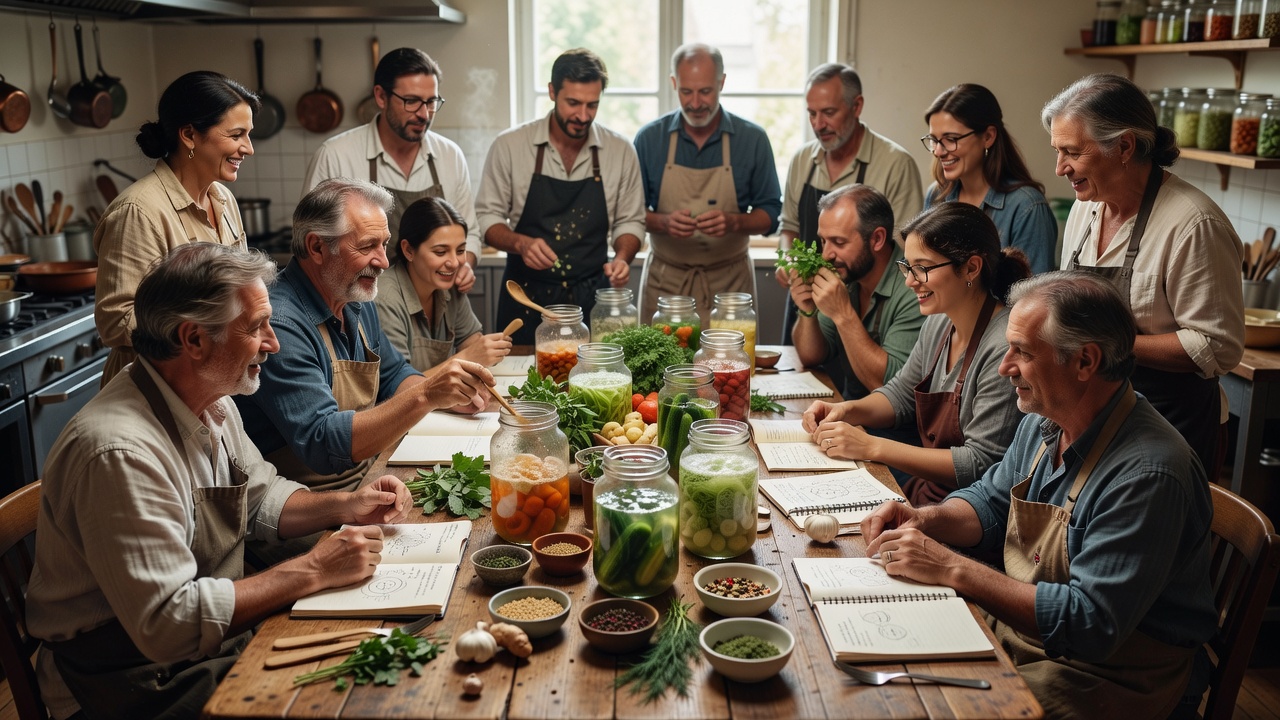
More than a technical category
Fermentation is a useful scientific category, but it is not a complete cultural description. Foods grouped together by microbial activity may belong to very different systems of hospitality, household labour, farming and exchange. A studio that documents only ingredients and elapsed time can miss why a food is made, who maintains its knowledge and when it is shared.
Begin with the name used by the people involved. Ask whether a translation helps the reader or flattens a distinction. One word may refer to a finished food, a starter, a stage of production or a family of preparations. Keep the original term where appropriate, explain its use and acknowledge variation rather than appointing one version as definitive.
Living traditions also change. Respect does not require describing a practice as ancient, untouched or identical in every household. Those claims often erase the creativity and practical judgement of contemporary cooks.
Two contexts, not one recipe family
Kimjang: the shared work matters
UNESCO’s account of Kimjang, making and sharing kimchi in the Republic of Korea foregrounds collective preparation and sharing. An archive entry concerned only with a cabbage formula would preserve part of the food while losing much of the practice. The timing of work, exchange between households and transmission of knowledge are documentary subjects in their own right.
This does not mean that one public description speaks for every Korean household. A responsible entry identifies whose account it follows. It also distinguishes a participant’s personal experience from a claim about an entire country or diaspora.
Kōji: name the material and the setting
Kōji-related practices connect ingredients, cultivated microorganisms and skilled handling in specific production settings. Miso, sake and shōyu are not interchangeable outcomes of one generic starter. A studio adaptation using a different substrate should state that change clearly rather than borrowing a familiar name as a guarantee of equivalence.
Writers such as Nancy Singleton Hachisu provide routes into Japanese food practices and the people sustaining them. Reading should lead outward to makers and regional distinctions, not turn a secondary source into ownership of the knowledge described.
Credit is a relationship
Acknowledgement begins before publication. Explain what the archive intends to publish, where it will appear and whether it might later be reused. A person may welcome a conversation while declining attribution, photography or publication of a family method. Permission for one purpose should not be stretched into permission for every future use.
Separate permission to tell a story from ownership of the practice itself. A studio cannot acquire exclusive cultural authority merely by recording a demonstration. If work is commissioned or compensated, describe the arrangement accurately. If a contributor asks for a correction or removal, keep a clear contact route and review the request with attention to the original agreement.
Translations deserve credit too. Record who translated, which language was used and whether an expression remains approximate. An elegant English sentence may conceal a difficult choice that the next researcher needs to see.
Follow ingredients across borders
Consider tempeh in Indonesian food contexts, injera in Ethiopian and Eritrean meals, and sourdough breads across many regions. These are useful starting points for comparison, but not evidence that every community uses the same materials or assigns the same meaning to a food. Ingredient availability, migration and equipment change what a household can reproduce.
A studio should identify its own position: where it works, whose account it has consulted and which substitutions it made. “Inspired by” is not a complete citation, but it can be the beginning of an honest distinction between a source practice and a new interpretation. Avoid claims that a European research kitchen has discovered a food already maintained elsewhere.
Comparative writing is strongest when it asks a focused question. How is responsibility for a starter passed on? What vocabulary describes readiness? Which records remain oral? Such questions allow differences to remain useful rather than forcing every tradition into the same technical template.
Leave room for the source to answer
An archive should make its claims revisable. Link to accessible primary accounts where possible, identify the scope of each source and invite corrections without demanding unpaid cultural consultation. The goal is not to collect the largest number of traditions under one brand. It is to make each documented encounter more specific, accountable and useful.
A good entry ends with a reader knowing both more and less: more about a particular practice, and less certainty that a single jar can represent a whole community. That is not a weakness in the record. It is an accurate boundary around what the record can say.
Next entry: observing the batch →